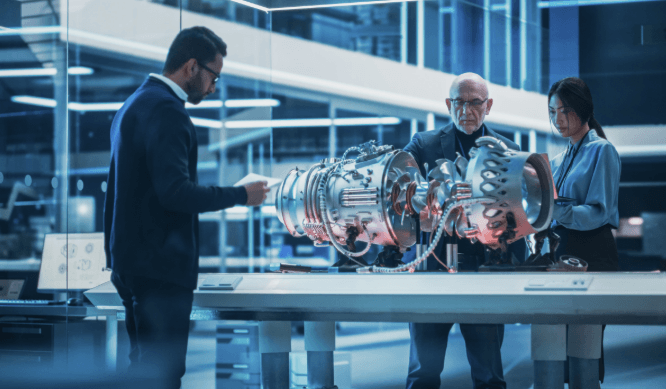
The evolution of aerospace technology rests on synchronized advances in materials, propulsion, and computing. Light yet resilient structures meet high-efficiency power and intelligent controls to broaden safe operation in air and orbit. Cross-domain lessons reveal shared architectures and safety margins, while governance and standards shape responsible autonomy. This convergence drives capabilities forward with sustainable lifecycles and global collaboration, inviting a closer look at how today’s choices redefine tomorrow’s horizons. The next step hinges on integrating these threads into coherent, scalable systems.
What Defines Aerospace Technology Today
Aerospace technology today is defined by the integration of advanced propulsion, lightweight and resilient structures, autonomous systems, and sophisticated sensing and control architectures that collectively enable safer, more efficient, and more capable flight across atmospheric and space domains.
This convergence drives aerospace ethics, shapes policy, and underpins microgravity manufacturing, where multidisciplinary rigor, systems thinking, and freedom-oriented innovation redefine what is possible.
The Engineered Path: Materials, Propulsion, and Computing
Material choices, propulsion architectures, and computing architectures co-evolve to determine overall system performance, resilience, and adaptability in modern aerospace design.
The discussion centers on materials science breakthroughs, propulsion design strategies, and computing advancement that enable lightweight, resilient architectures, real-time systems, and adaptive control.
Interdisciplinary integration accelerates performance gains, reliability, and autonomy while preserving safety, sustainability, and freedom to explore future aerospace frontiers.
From Aircraft to Spacecraft: Evolution Across Domains
How do the lessons learned across flight regimes inform the trajectory from atmospheric aircraft to orbital and beyond? Cross-domain synthesis reveals shared architectures, safety margins, and adaptive control, translating materials, propulsion, and AI governance into scalable platforms.
Envisioned trajectories touch warp drives as speculative drives; meanwhile “humans in space” and “aerial robotics” shape governance, ethics, and interoperability for resilient, freedom-minded exploration.
The Frontiers and Future: Autonomy, Sustainability, and Collaboration
The frontier ahead synthesizes autonomy, sustainability, and collaboration as a triad shaping next-generation aerospace systems. Autonomous platforms redefine risk, reliability, and mission flexibility while ethics of autonomy demand transparent governance and accountability. Sustainability economics guides lifecycle efficiency, material choices, and energy use, aligning innovation with cost discipline. Multidisciplinary collaboration accelerates standards, safety, and open innovation, empowering resilient, freedom-oriented aerospace advancement.
Frequently Asked Questions
How Do Regulatory Standards Shape Aerospace Innovation Timelines?
Regulatory standards constrain innovation pacing by aligning timelines with safety, reliability, and interoperability. Regulatory timelines shape risk assessment, certification, and testing cadence, guiding development milestones; organizations translate constraints into measured, forward-looking strategies that balance freedom with disciplined progress.
What Role Does AI Ethics Play in Autonomous Flight Systems?
AI ethics in autonomous flight systems centers on AI fairness, algorithm transparency, autonomous flight ethics, safety assurance, decision explainability, and human in the loop governance, guiding rigorous risk assessment, multidisciplinary collaboration, and forward-looking, freedom-valuing aerospace innovation.
How Are Cybersecurity Risks Mitigating in Spaceborne Networks?
Approximately 87% of spaceborne networks experience multi-layer cyber incidents, and mitigation emphasizes cyber resilience, threat modeling, spectrum sharing, and encryption standards to safeguard communications, ensure resilience, and enable autonomous operations while pursuing forward-looking, freedom-oriented multidisciplinary precision.
See also: The Ethics of Big Data Collection
What Economic Factors Most Influence Aerospace R&D Funding?
Capital investment and_supply_chain dynamics dominate aerospace R&D funding, shaping trajectories toward disruptive technologies; market cycles, government priorities, and private collaborations determine risk tolerance, while global competition incentivizes preemptive capability development and resilient, scalable innovation ecosystems for freedom-minded stakeholders.
How Will Urban Air Mobility Integrate With Existing Airspace?
Urban mobility will require Airspace integration with layered regulatory standards, AI ethics, cybersecurity, and resilient aerospace R&D funding models; Spaceborne networks augment connectivity, enabling cross-domain operations, while perpetual innovation preserves freedom for safe, multidisciplinary, forward-looking aviation ecosystems.
Conclusion
As aerospace advances unfold, the synergy of materials, propulsion, and computing keeps pushing boundaries. Across air and orbit, capabilities mature through disciplined iterations, resilient design, and smarter autonomy. Yet the path remains contingent on governance, standards, and collaborative risk management that preserve safety and ethics. With each leap, the frontier tightens—a watchful pause before the next transformative leap—where discovery and responsibility converge, leaving the reader poised on the edge of what remains to be revealed. The next chapter awaits.